Inclusive Design · Case Study
Designing play that doesn't stop when it rains
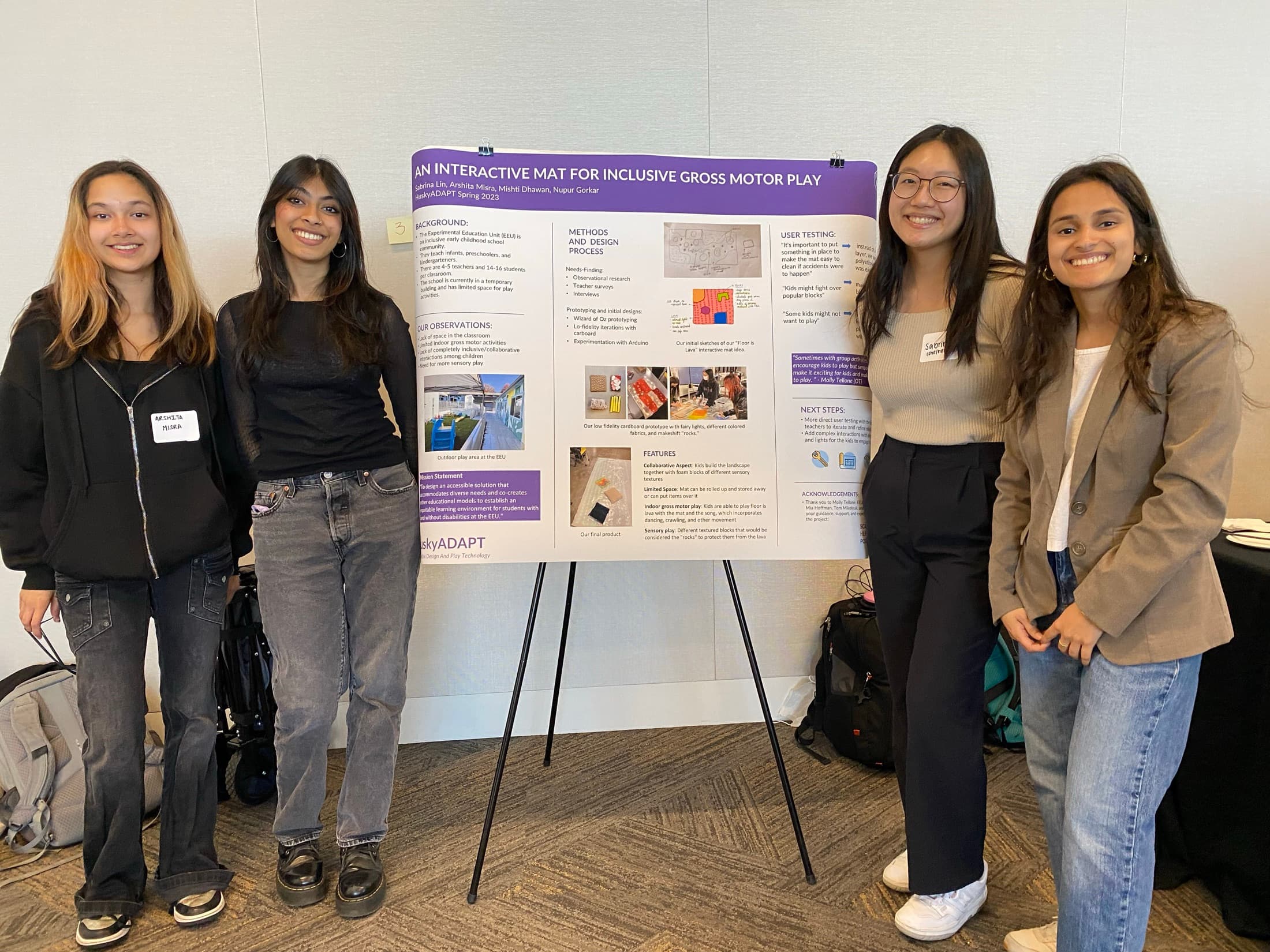
Seattle rain cut outdoor playtime short, and the indoor alternative left kids with sensory differences playing far less actively than their peers. I interviewed teachers and occupational therapists, observed play indoors and out, and prototyped an interactive 'floor is lava' mat: a light-up surface with hand-sewn sensory blocks the kids place themselves.
- Role
- Research · Concept · Prototyping · Fabrication
- Team
- With Sabrina Lin, Mishti Dhawan, Nupur Gorkar · HuskyADAPT
- Partner
- Experimental Education Unit (EEU), Seattle
- Timeline
- Spring 2023
Overview
Weather owned the schedule
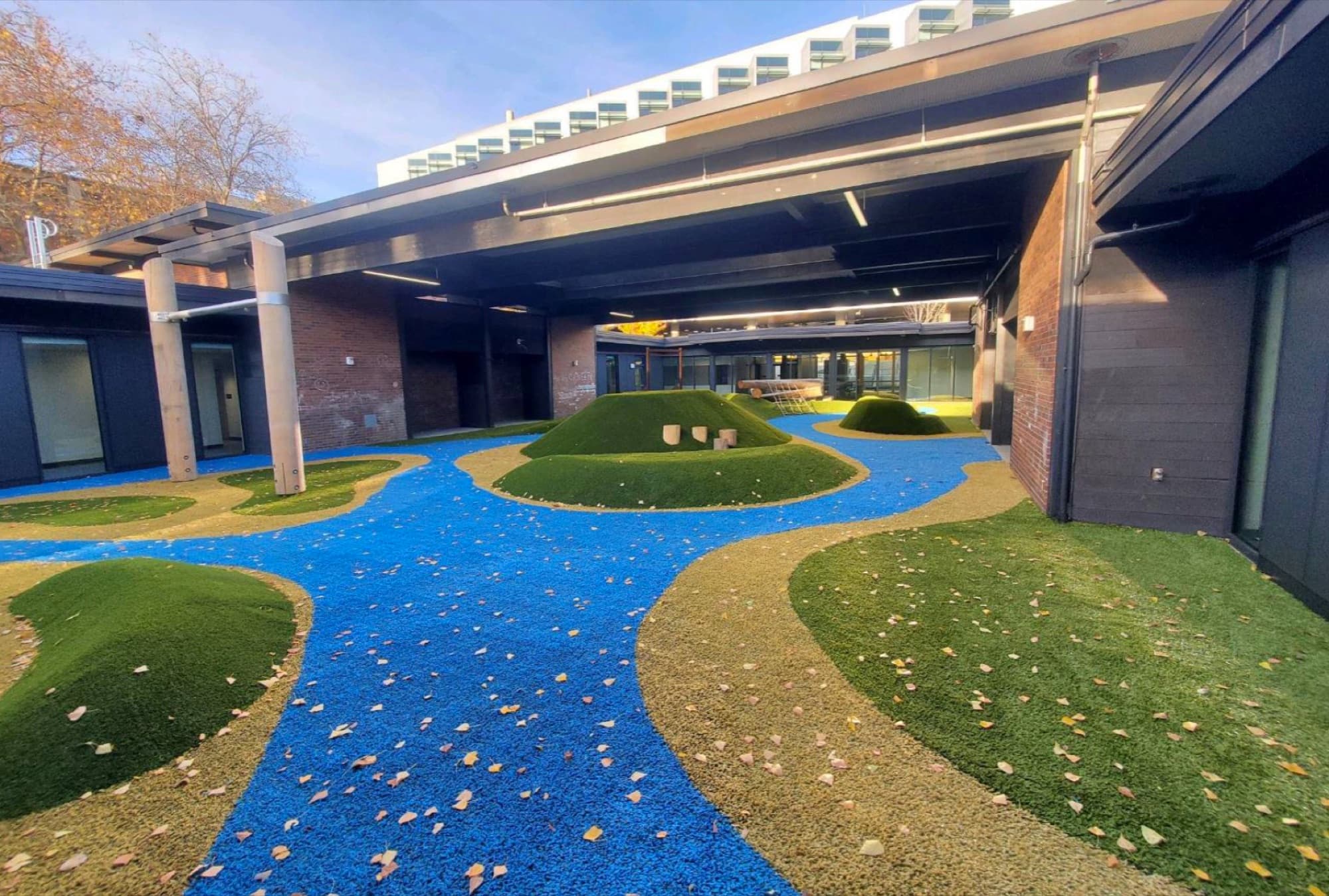
Rain cancelled outdoor play routinely, and the indoor alternative wasn’t equivalent.
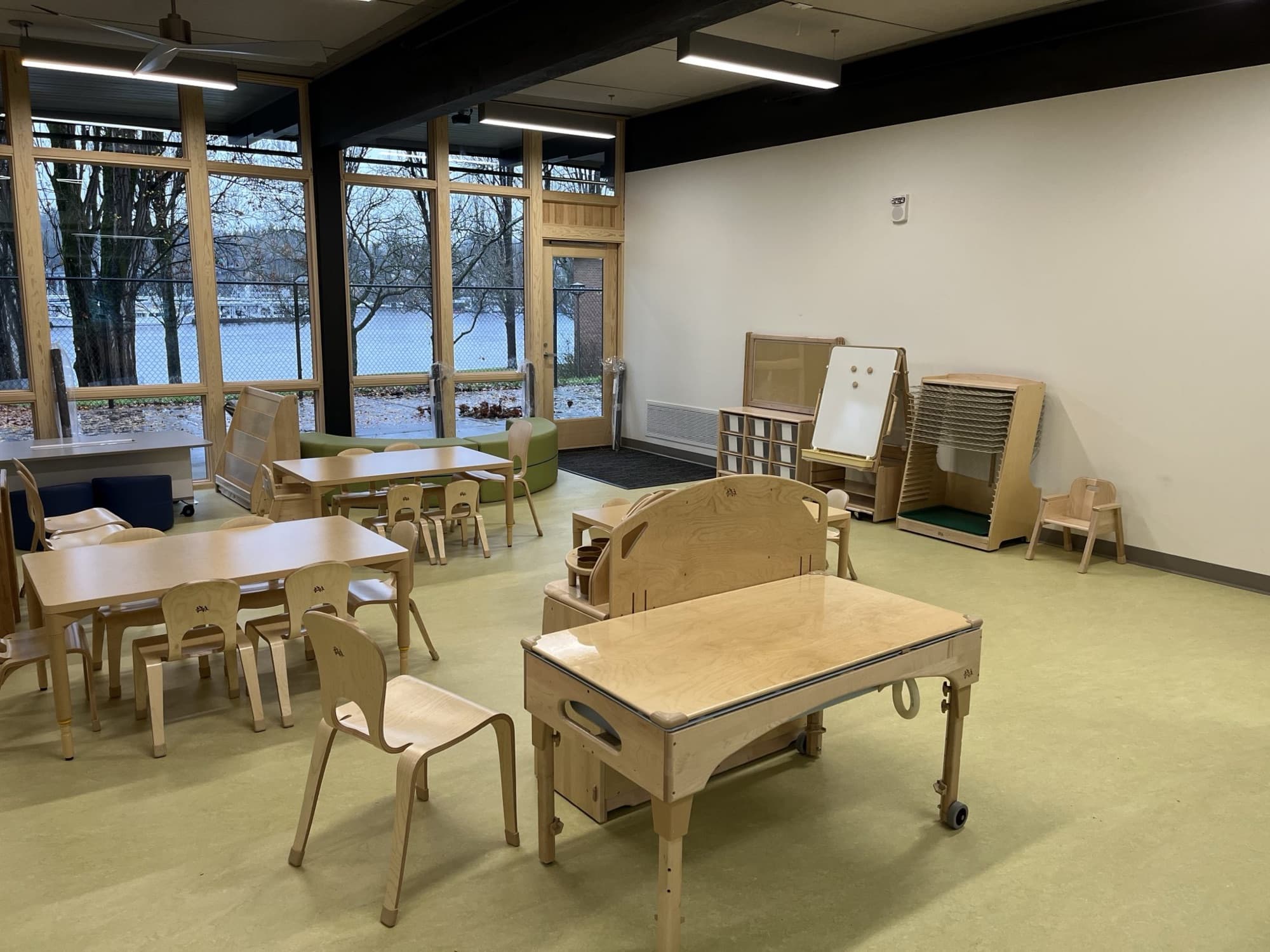
Indoor play wasn’t built for sensory difference. Neurodivergent students disengaged where non-disabled students kept playing.
Play is how motor, sensory, and social development happens at this age.
How do we give these kids active, physical, social play indoors — on rainy days, on their terms?
Research
I watched before I asked
I interviewed classroom teachers and occupational therapists who work with these children daily, and ran teacher surveys.
I observed indoor and outdoor free play, watching how kids engaged with the space and each other.
Decision factors
Constraints → choices
| Constraint | Choice |
|---|---|
| Ages 3–4 | No screens, no instructions, no reading |
| Wide range of sensory needs | Many textures, self-selected — never one prescribed input |
| Motor and cognitive disabilities | Floor-level, whole-body, no fine motor requirement |
| Indoor classroom, limited space | Rolls up for storage, wipeable, durable |
| Play is social | Multiple kids on the mat at once, building the space together |
Design decisions
The floor is lava
A game, not an instruction
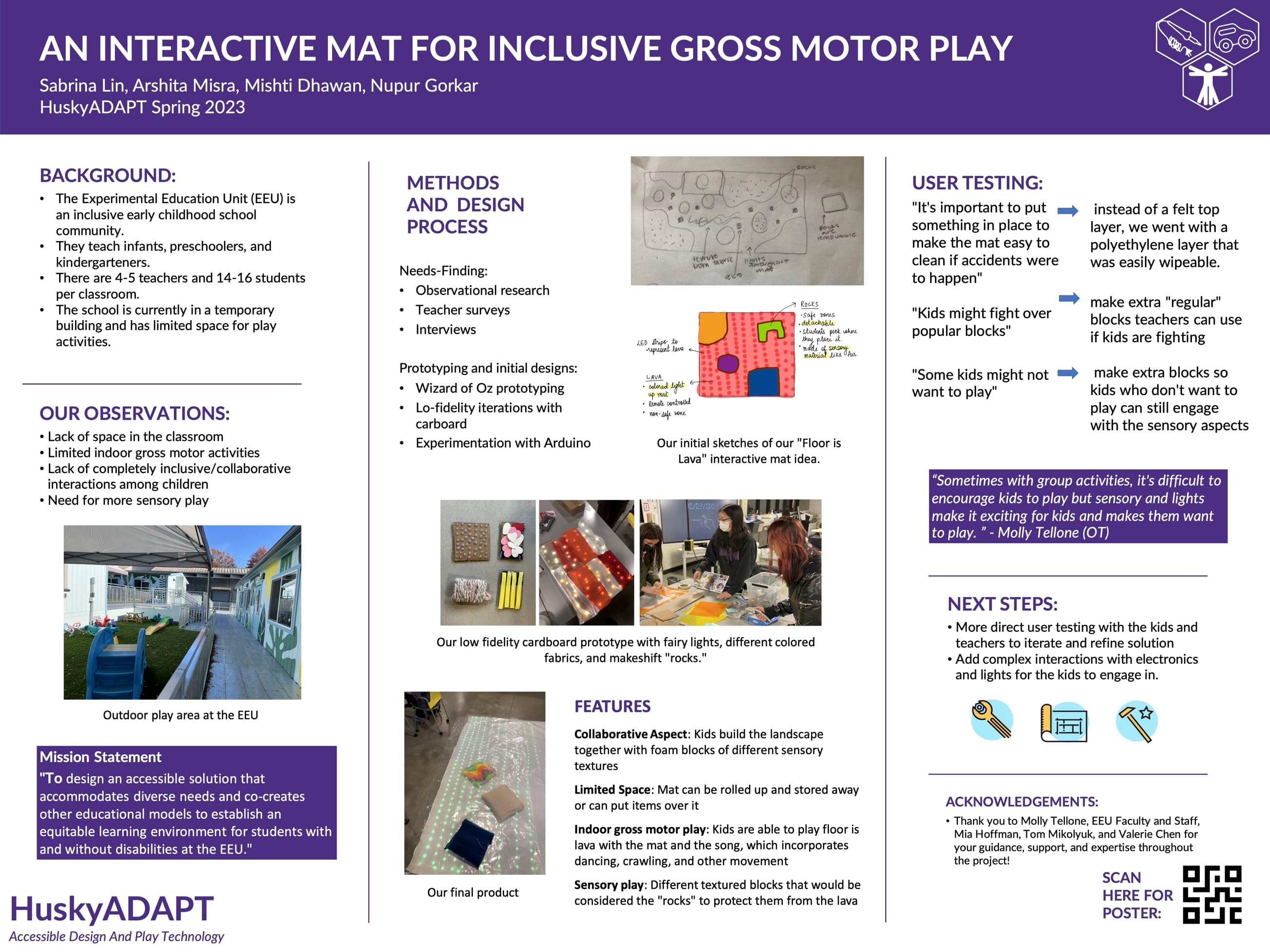
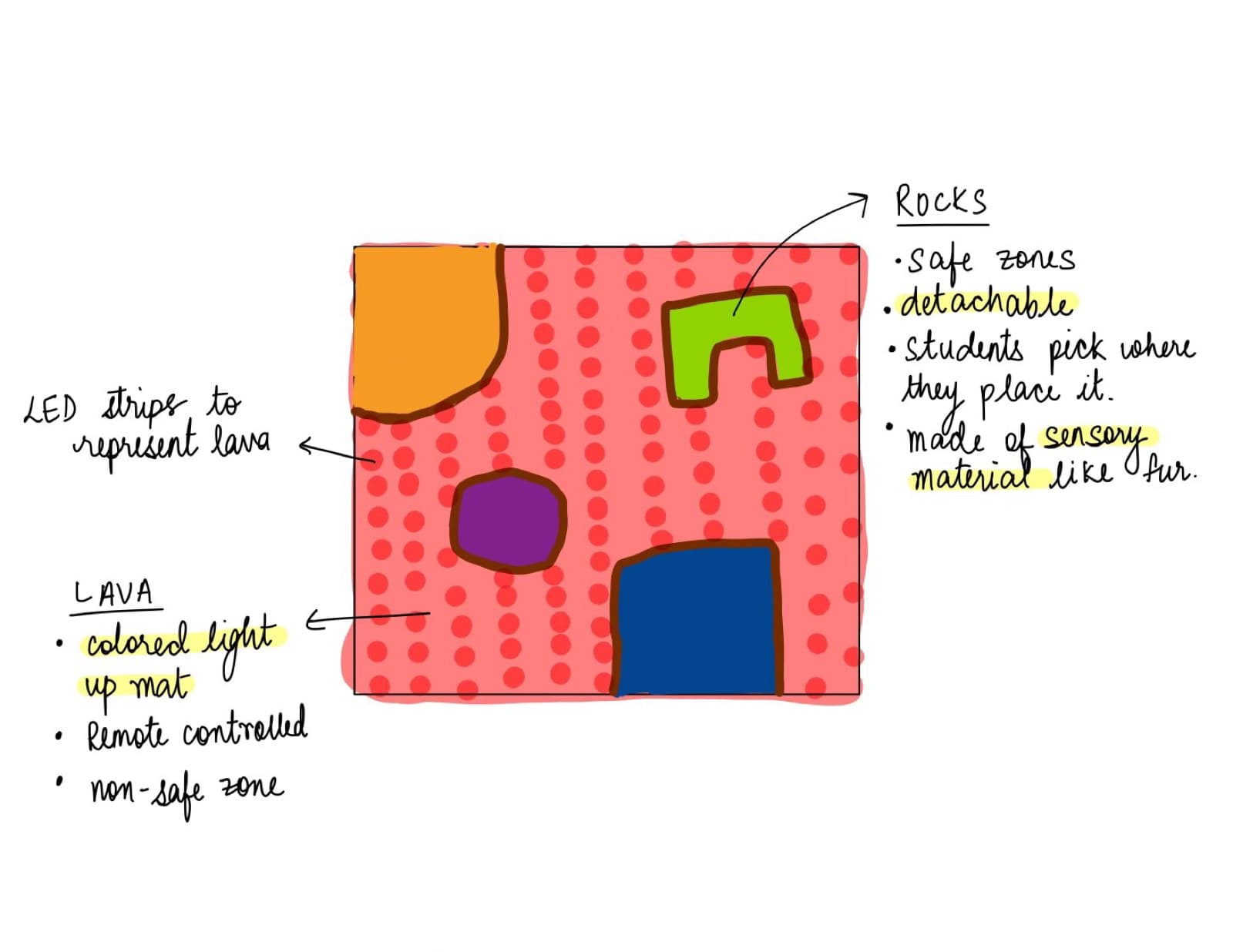
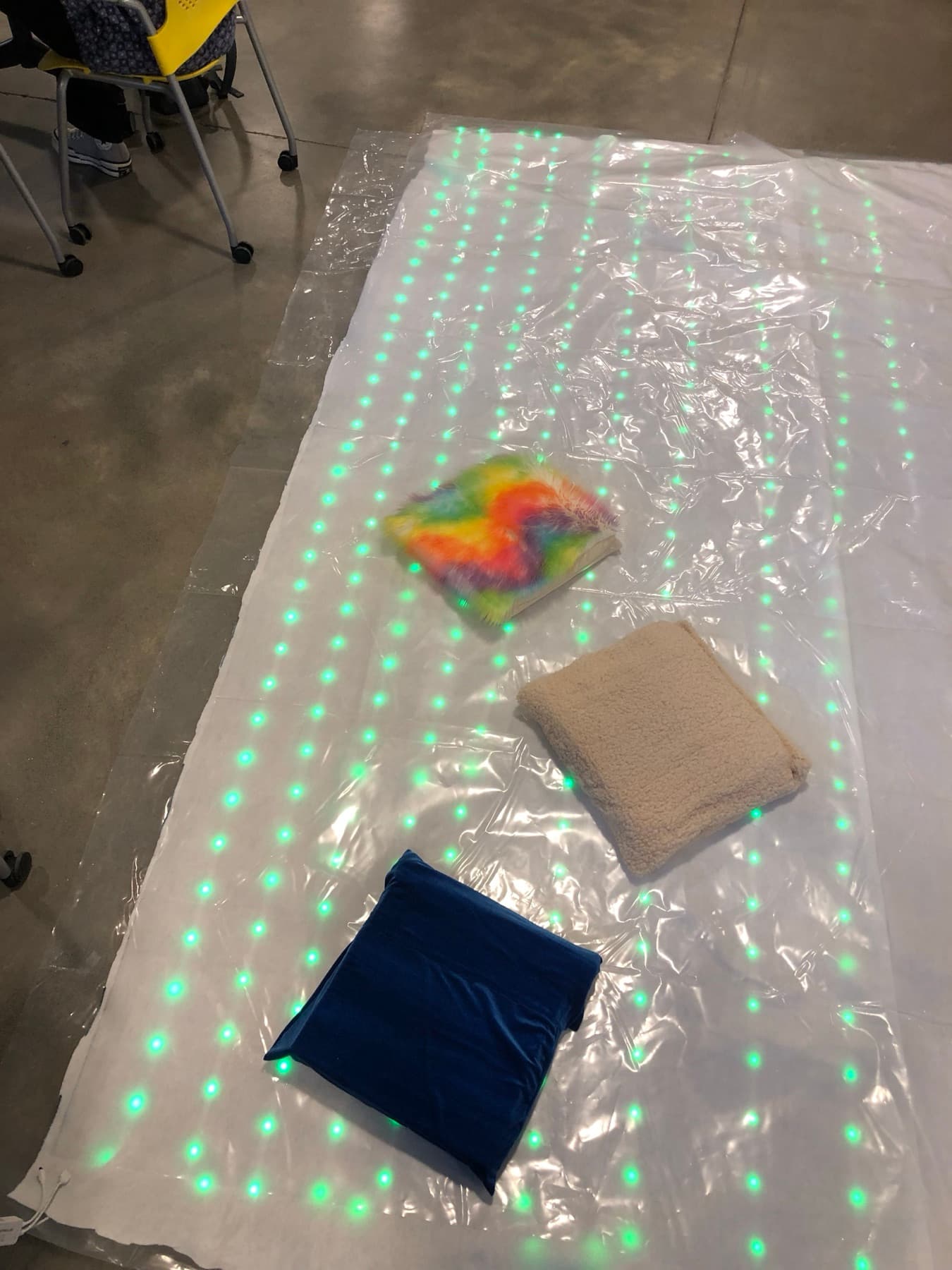
The mat lights up as “lava.” Sensory blocks are the “rocks” — detachable, and the kids choose where to place them.
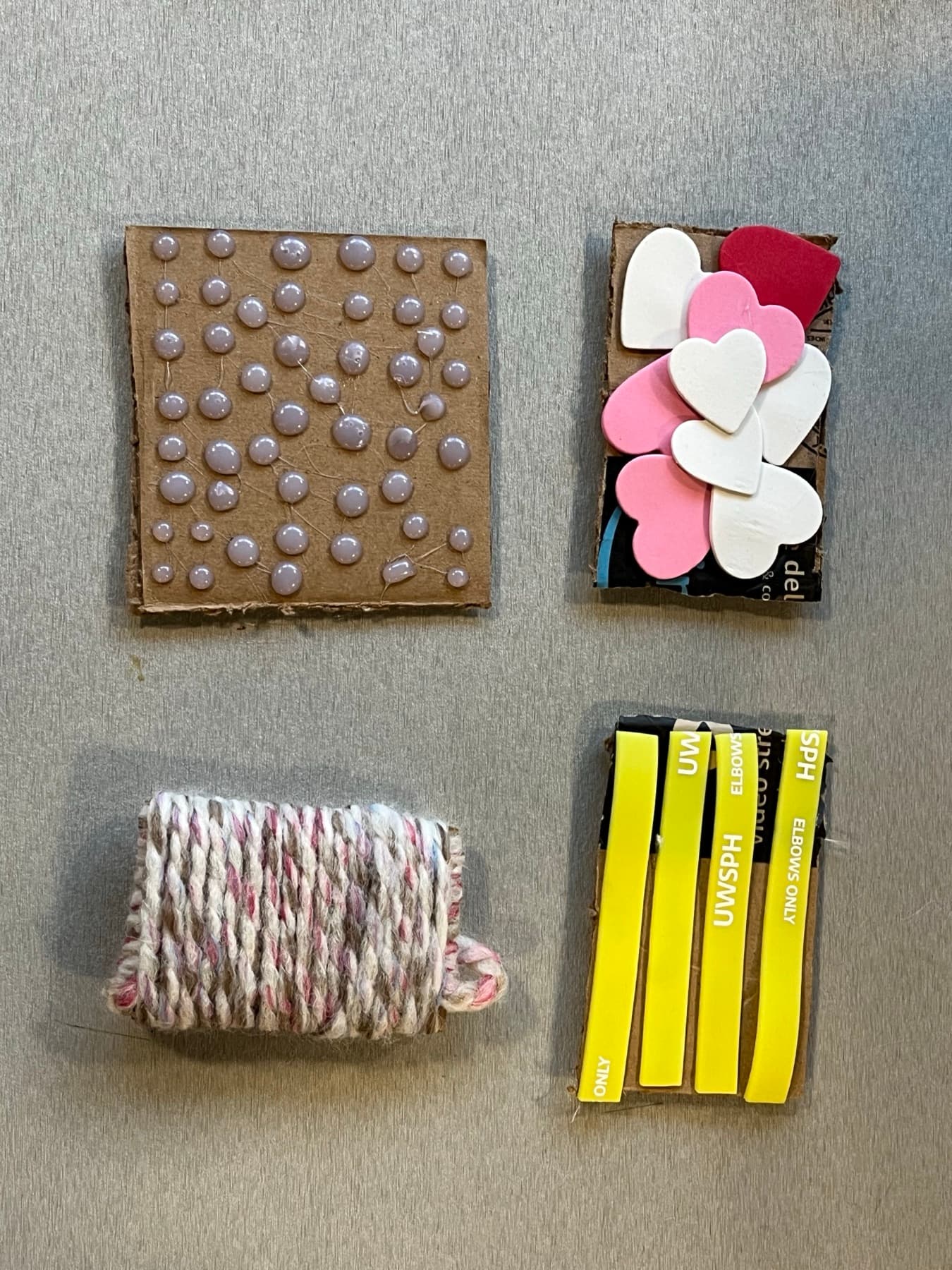
Textures the kids choose
Sensory variety is the feature. Kids find their own input instead of being handed one.
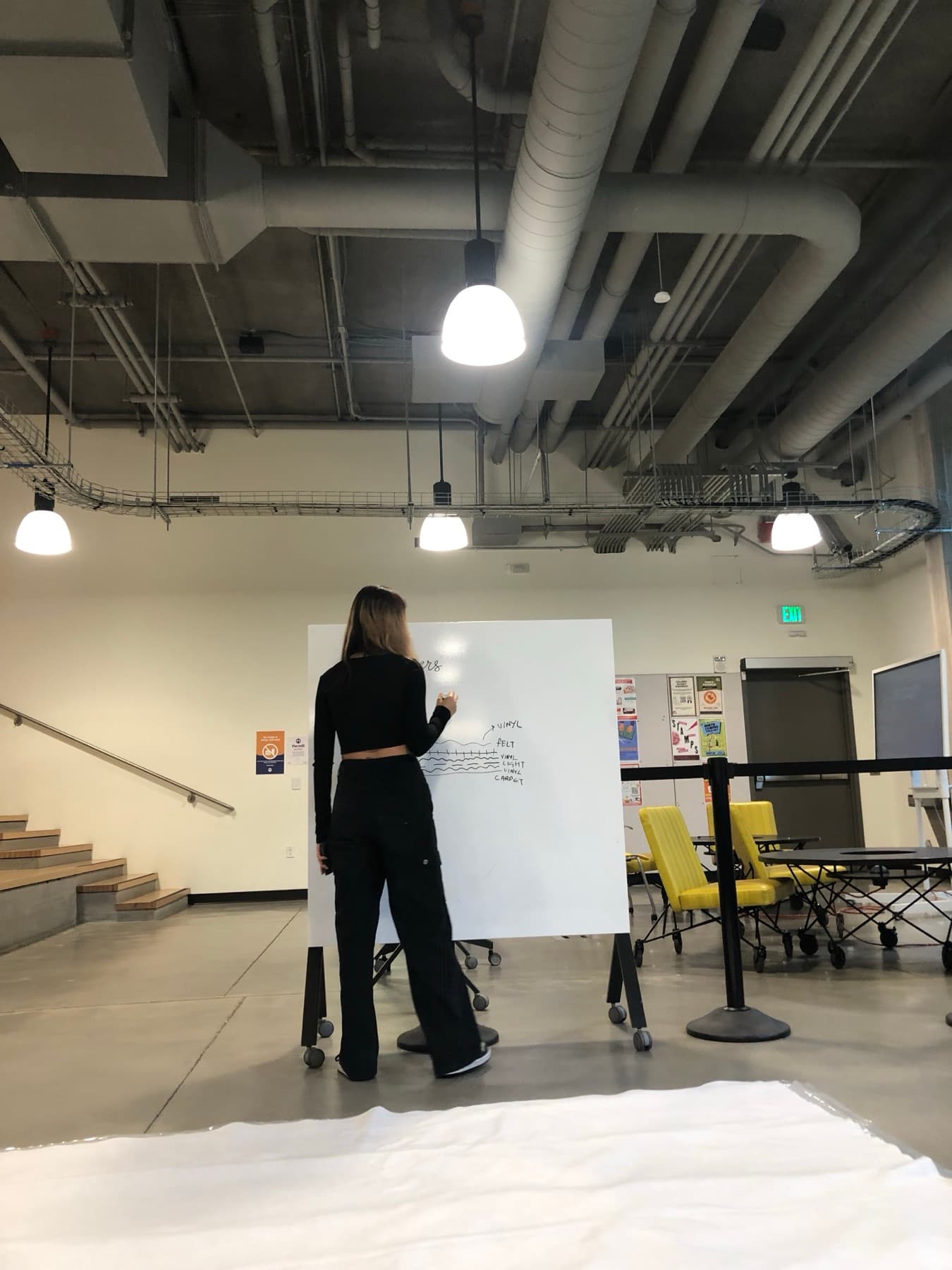
A layered mat
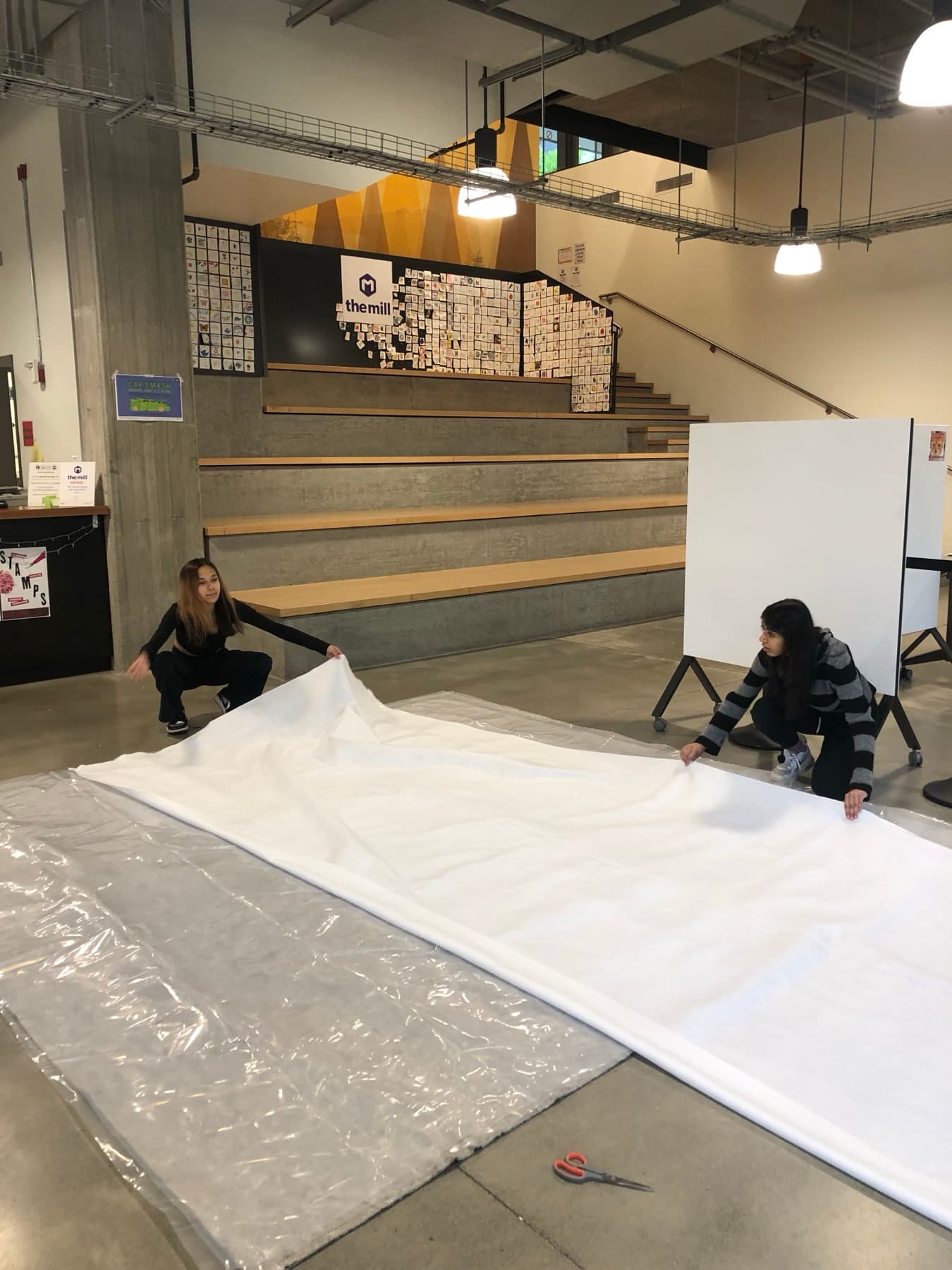
Wipeable polyethylene on top, lights in the middle, cushioned base. Teachers flagged spills early, so the surface had to clean up fast.
Light as feedback
Immediate, non-verbal, legible to a three-year-old.
Wizard of Oz test
We faked all of it first
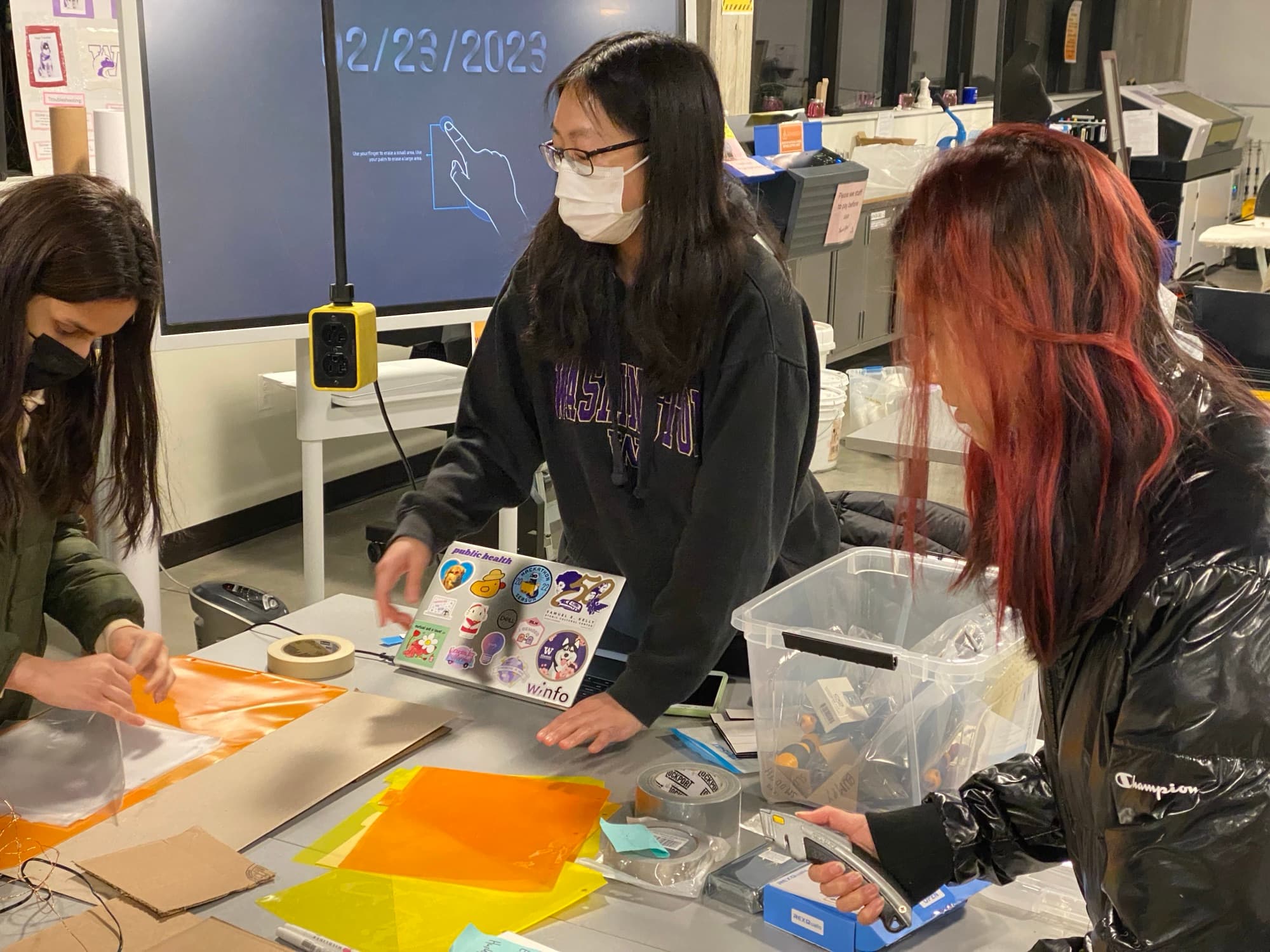
Cardboard stand-ins for the sensory blocks, each with a real texture. A mat with lights, no sensors. A team member off to the side, triggering the lights by hand.
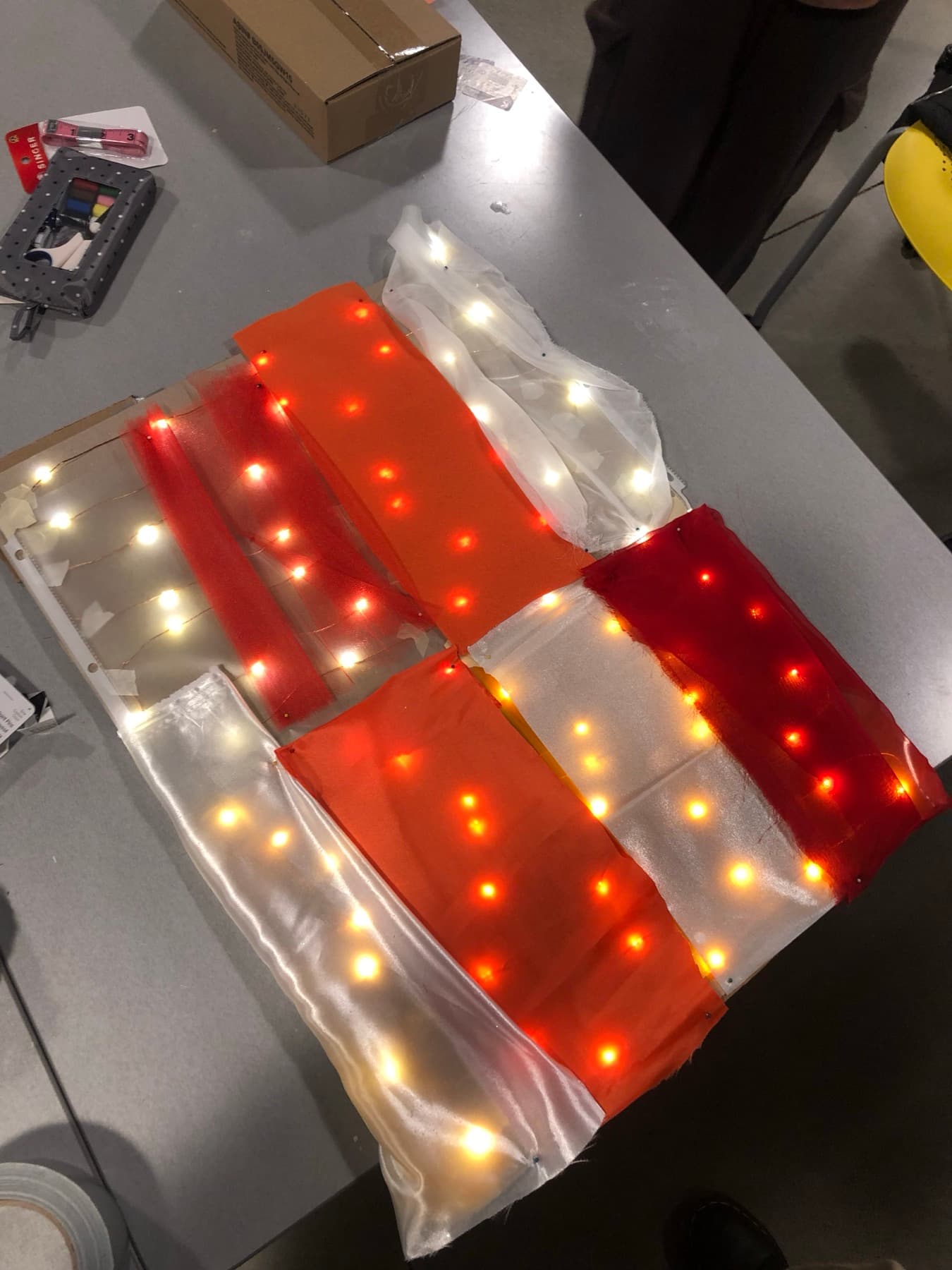
The kids invented floor-is-lava on the spot — and fully believed the mat was reacting to them.
The response loop was the thing. Kids didn’t need to be taught; they made up their own rules and played together. We had that signal before writing a line of Arduino code.
Prototype
Arduino, and a lot of sewing
Arduino-driven lights, with the interaction planned around pressure and motion on the mat.
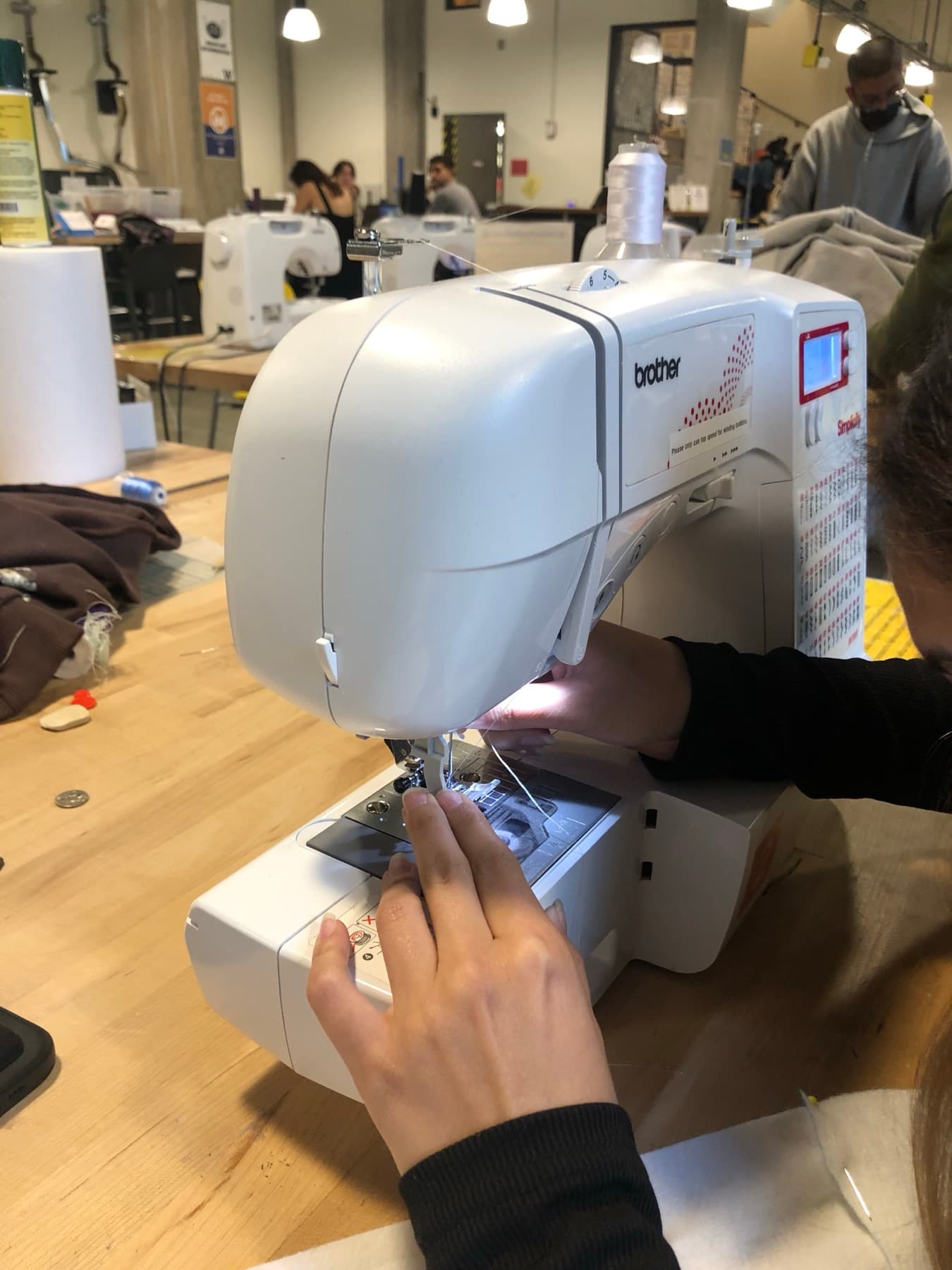
Hand-sewn sensory cushions. I learned to sew for this project and sewed every one.
Modular construction: cushions and mat sections that pack down to the size of a classroom cupboard.
Impact
Where it landed
10+ classrooms
using the mat
150 children
with neurodivergence and motor and cognitive disabilities
Still in use today
years after the pilot
What I learned
Three things I'd carry forward
Fake the system before you build it
One person switching lights by hand told us more than a working prototype would have.
Watch, don't ask — when your users are three
The interviews framed the problem; the observations defined it.
Fabrication is design work
The sensory range came out of the sewing, not the spec.